
Plinko
O meio paga 20. As bordas pagam 5.000.
Uma curtida solta uma ficha com o seu rosto, e ela cai por doze fileiras de pinos até o balde em que quicar. O meio é onde uma ficha mais quer cair e paga 20; os dois baldes das pontas pagam 5.000 e quase nada chega lá. Tocar mais forte não envia mais fichas — envia fichas mais pesadas, e o número no rosto de uma ficha é o que seu toque vale quando ela cai. Um presente faz a única coisa que o esforço não consegue: decide em que parte do tabuleiro suas fichas podem cair.
- 13
- baldes
- 5,000
- pontos na borda
- 60
- fichas ao mesmo tempo
- 6
- degraus de presente
Como se joga
Todo mundo já sabe jogar
Uma ficha cai por um tabuleiro de pinos até um balde. Ninguém assistindo a uma live precisa que isso seja explicado, e essa é toda a razão de funcionar num overlay onde nada pode ser lido.
Uma ficha a cada três segundos, por mais forte que você toque
Uma ficha por pessoa a cada três segundos, então o tabuleiro de quem toca forte é algo que se acompanha em vez de uma cortina. Os toques do meio não são jogados fora — vão junto como peso, e a ficha diz no próprio rosto quantos está carregando.
O balde diz o que uma curtida paga
Não é um multiplicador. Cada balde traz escritos os pontos que uma única curtida caindo ali ganha, então ninguém precisa fazer conta com uma aposta que não vê. Uma ficha com quinze toques paga quinze vezes o que está escrito.
O meio é a armadilha
O lugar mais provável para uma ficha é o centro, e o centro paga 20. Tudo na forma do tabuleiro puxa para o balde mais barato, que é exatamente o que faz as bordas valerem a espera.
Um presente compra posição, não uma promessa
Cada degrau estreita a parte do tabuleiro em que uma ficha pode cair — fora do centro, depois a metade que paga, depois os maiores baldes. Dentro dessa faixa ela ainda cai nas probabilidades do próprio tabuleiro, então o 50x continua raro até para quem pagou por ele.
O degrau mais alto paga a sala inteira
Um Galaxy solta seis fichas na melhor faixa e depois dobra todos os baldes do tabuleiro por doze segundos — para todo mundo que assiste, inclusive quem nunca enviou nada.
O que um presente compra
A mesma escada que o servidor cobra. Um presente que não alcança um degrau ainda compra alguma coisa.
- grátisComment
Um assento, e sua foto de perfil em cada ficha que você solta
- grátisLike
Uma ficha. Toque mais forte e elas ficam mais pesadas em vez de mais frequentes — nada do que você envia se perde
- 1–4 🪙Rose
Uma ficha grande, larga o bastante para abranger dois baldes, que sempre volta valendo pelo menos o que é
- 5–19 🪙Finger Heart
Um punhado de fichas de uma vez, caindo nas probabilidades do próprio tabuleiro
- 20–98 🪙Perfume
Fichas que não conseguem cair no meio — fora do centro, onde o tabuleiro começa a pagar
- 99–198 🪙Hand Hearts
Fichas que só conseguem cair na metade que paga do tabuleiro
- 199–999 🪙Sunglasses
Fichas que só conseguem cair nos quatro maiores baldes — as bordas, ou ao lado delas
- 1,000+ 🪙Galaxy
Seis fichas na metade que paga, e todos os baldes do tabuleiro pagam em dobro por doze segundos, para a sala inteira
Como fica na transmissão
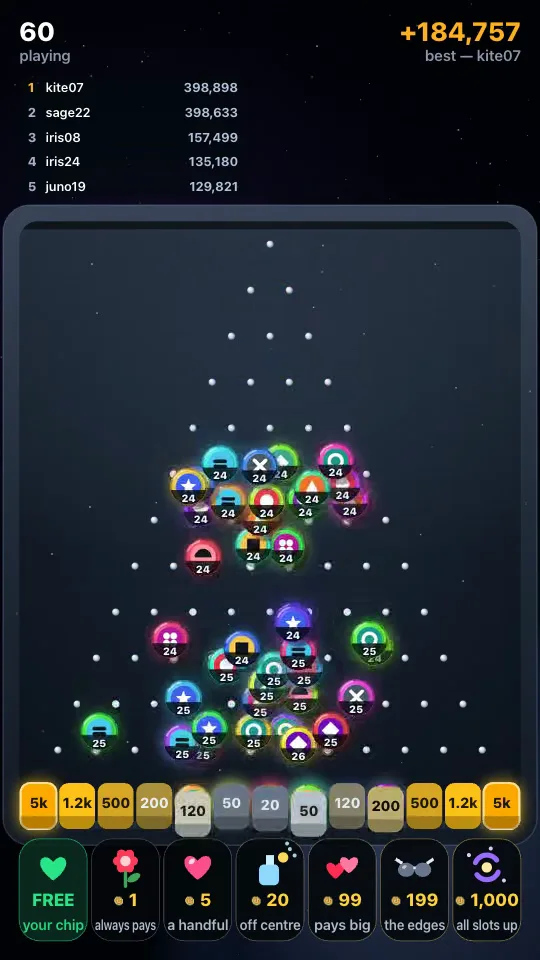
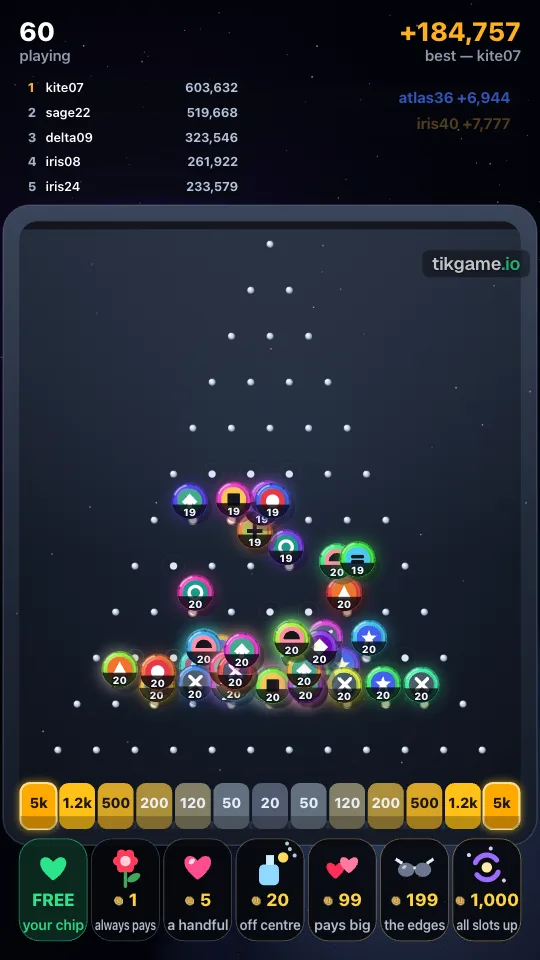
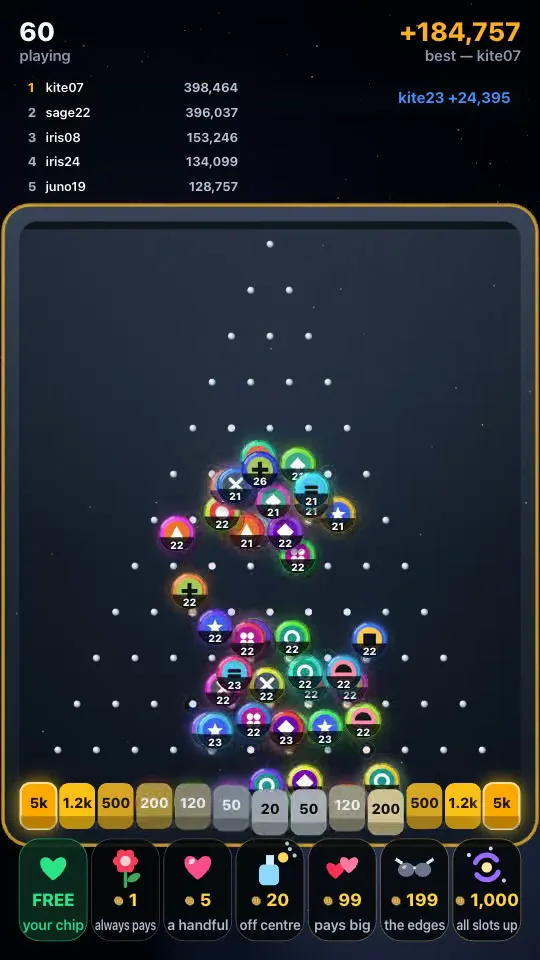
Capturas reais de rodadas reais, não mockups.
Mesmo link, outro jogo
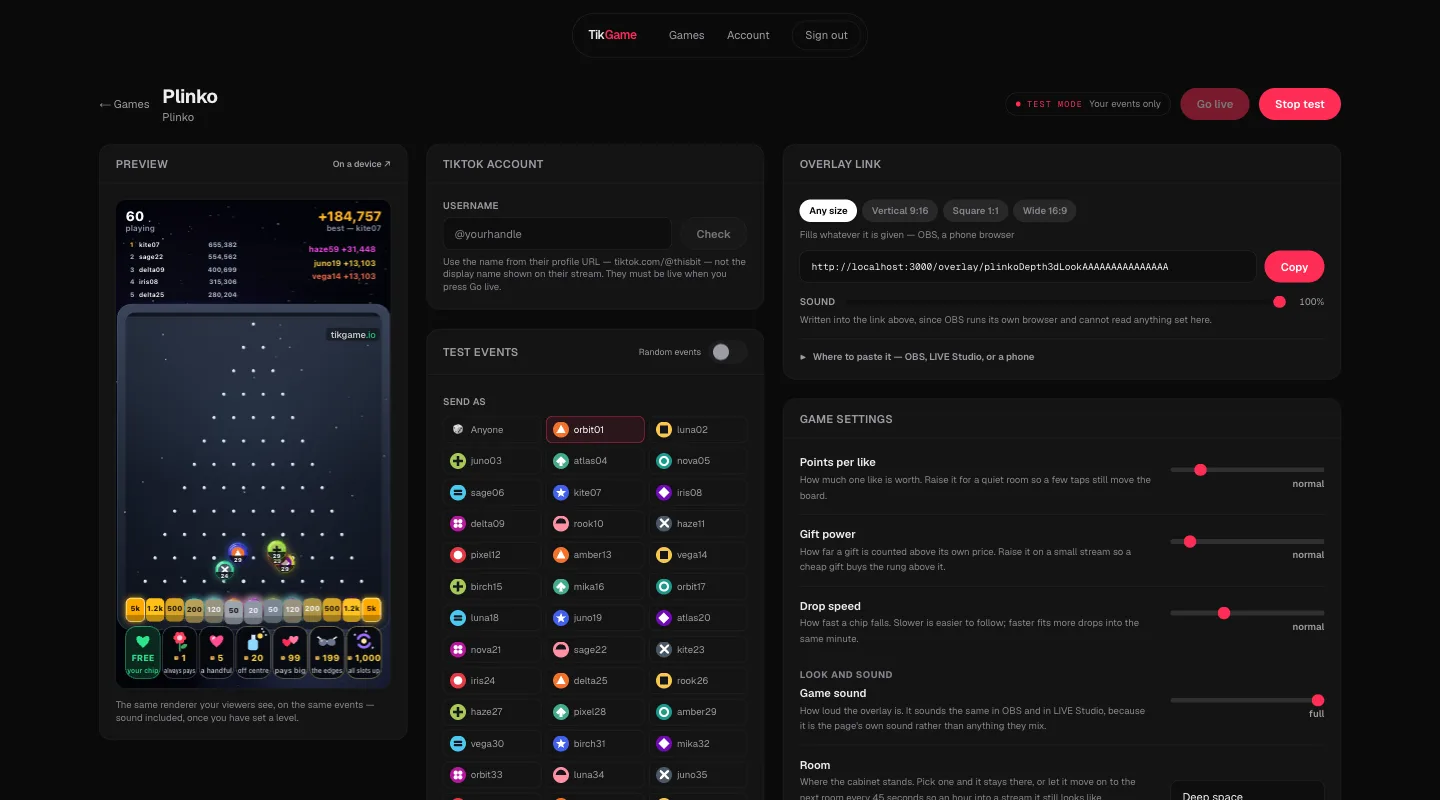
Trocar de jogo é uma configuração, não uma instalação nova. Seus espectadores não fazem nada diferente.
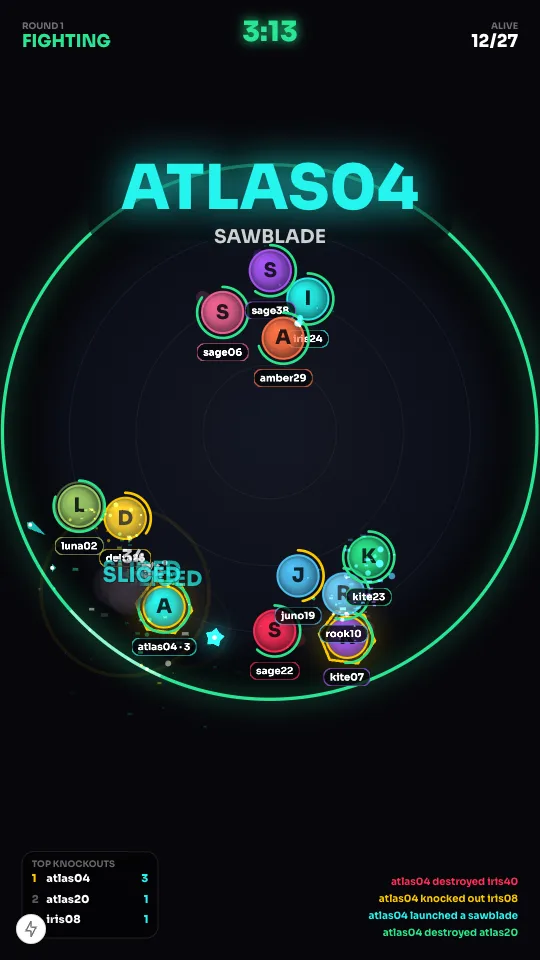
Anyone who chats, likes or gifts drops into the ring as a fighter with their own name above them. Bodies collide with real momentum, bullets are the only way out, and the most knockouts takes the round.
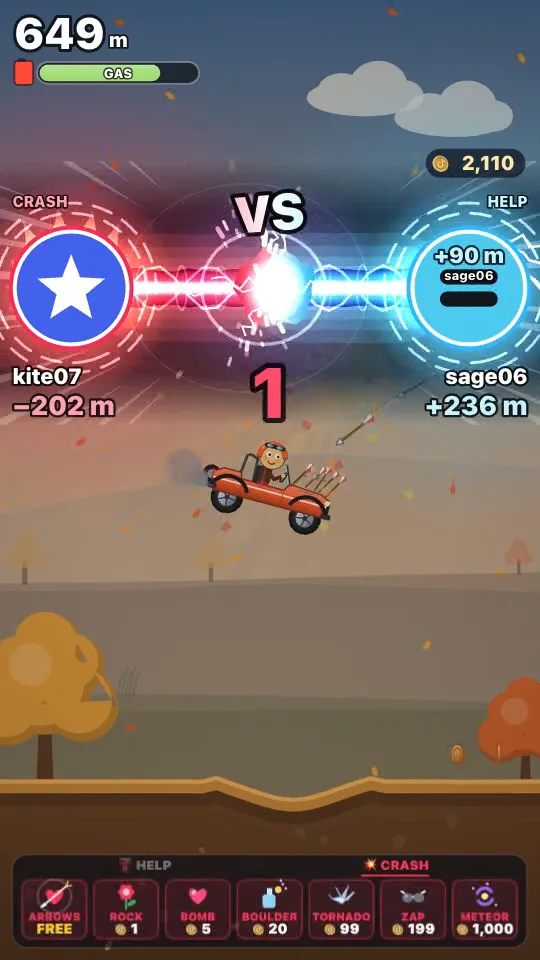
Every other game here is played by your viewers while you watch. In this one you are the driver: you steer an open-top off-road jeep down an endless, hilly road from your phone or your computer, and your room fights over how far you get. Every like is an arrow that knocks you back, and gifts throw you back harder — a bomb, a tornado, a Galaxy's meteor — while your fans carry you on with nitro, a tailwind, a rescue helicopter and a whale's wave. When big gifts from both sides land at once, their senders face off in a beam duel, and the winner takes the jeep. The score is how far you got.
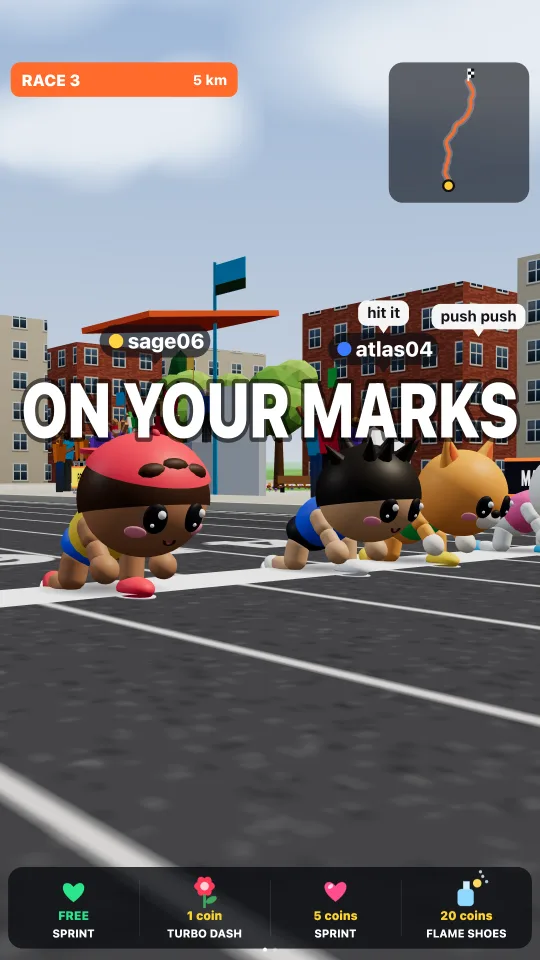
Everyone who walks into your LIVE, comments, likes, follows or sends a gift becomes a runner — one of 36 cute characters, with their name over it — racing everybody else for minutes down kilometres of winding road through town, forest, mountains and desert. Likes are speed and every gift is a burst of speed on the sender's own runner, while a broadcast camera follows the leader, the pack and whoever just paid. On your marks, set, the gun, a podium — then the next race on a new course.
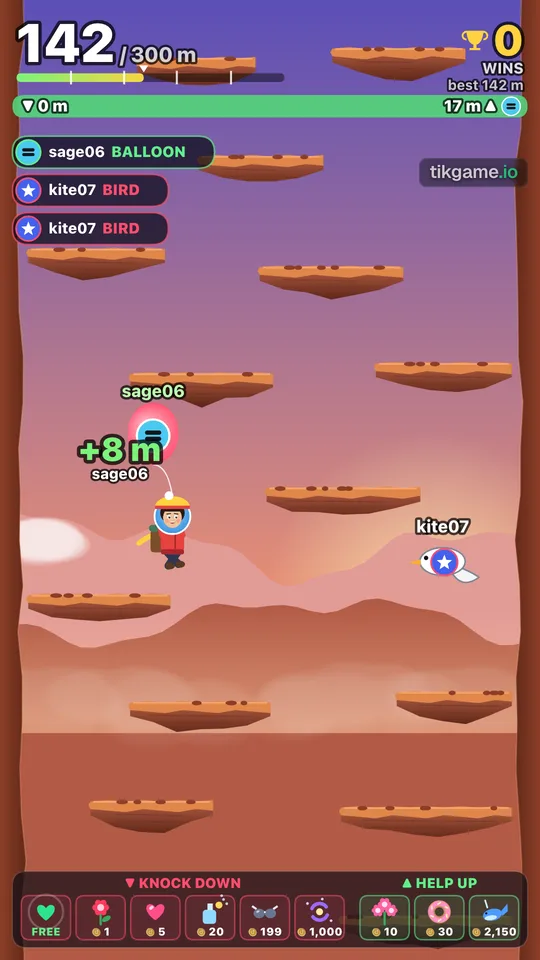
Every other game here is played by your viewers while you watch. In this one you are the player: you run and jump your way up a mountain, from your phone or your computer, and everything your room sends is aimed at you. Likes blow wind across the cliff, a Rose sends a bird with the sender's face on it, a Galaxy brings a meteor down — and your fans fight back with balloons, shields, heart wings, a rescue helicopter and a rocket. Reach the flag and it counts as a win.
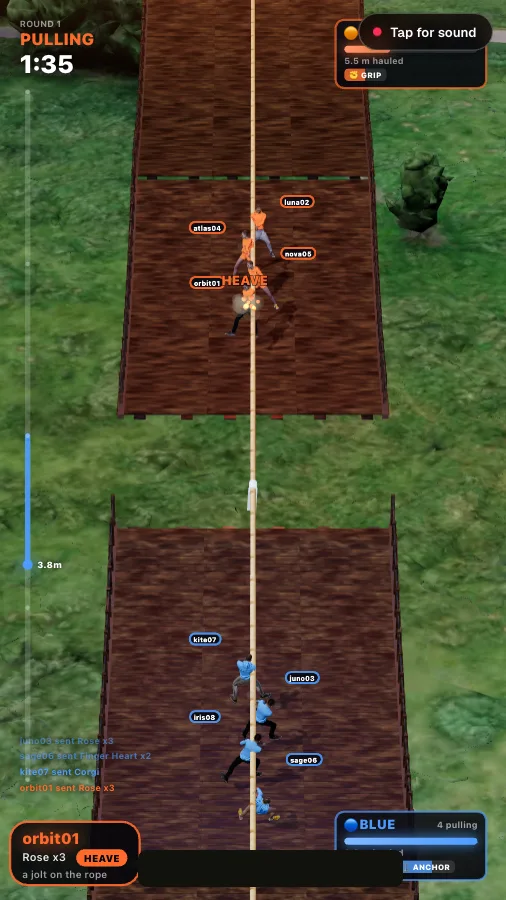
Comment or like and you're pulling — for whichever side is behind, so the two teams stay even without anyone picking one. A hundred people tapping is what actually moves the knot, not one person mashing harder. Six gift rungs buy six different kinds of leverage, from a grip that hauls on its own to a titan worth a dozen pairs of hands. Lose the pull and your side is walked backward off the edge of the boards.
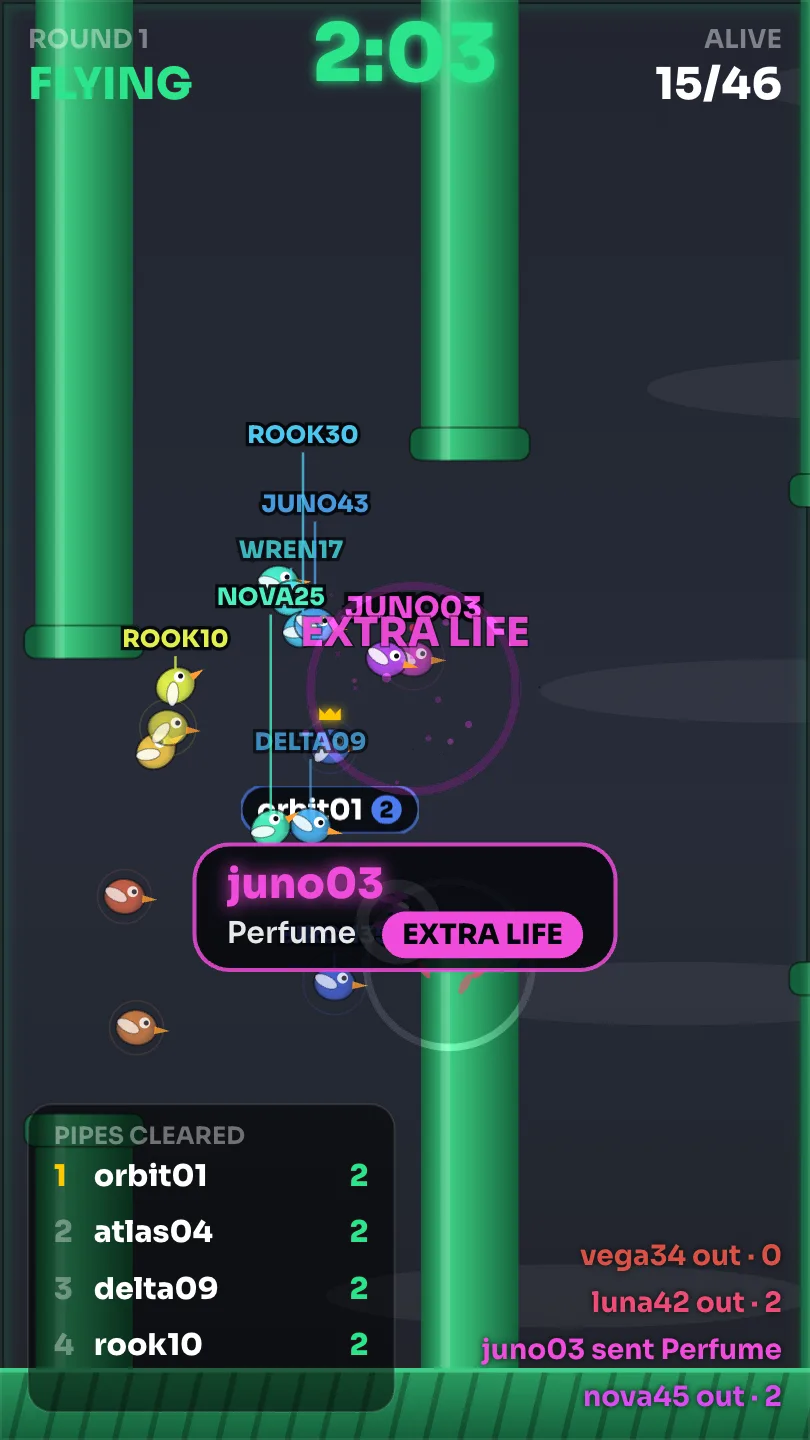
Everyone watching gets a bird, and a like is the only input the game needs — the cheapest thing TikTok can send is the only thing it asks for. The bird flies itself and nothing can hit it; what a viewer owns is the fuel, and the tank empties every second whether they tap or not. Run dry and the bird drops out of the sky and sits on the ground until the next like lifts it — nobody is ever knocked out. Birds tire, too: the longer one stays up the heavier it gets, so even somebody tapping without pause comes down eventually and takes off again rested. There are no rounds: the flight runs as long as the stream does, and the board counts how much of it each person kept their bird in the air.
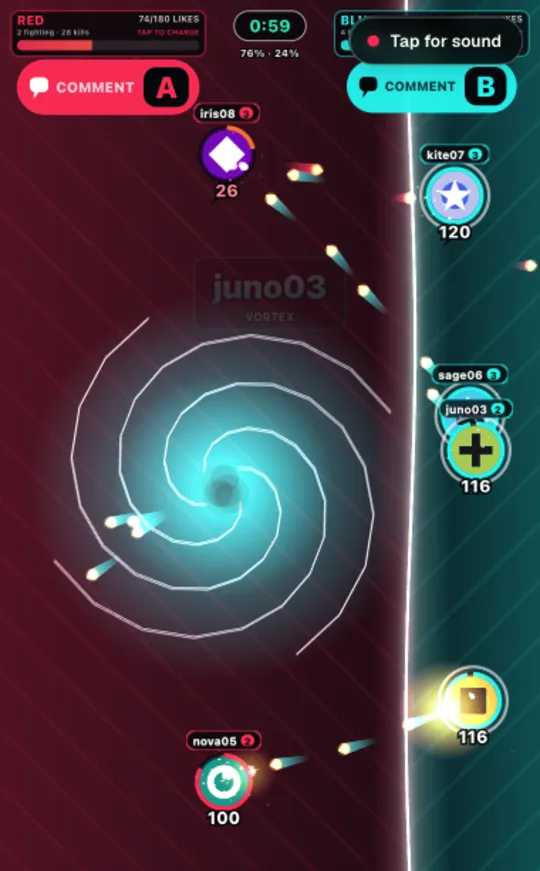
Type a side's name in chat and your fighter spawns there and walks to the seam to fight whoever's opposite. Likes charge your team's shared nuke and fire your own fighter's next shot; a hundred and fifty of them and the whole team drops one on enemy territory. Gifts buy five ranged attacks, from a bullet spray up to a nuke that shoves the border itself. Whichever side is stronger at the seam pushes it back, so the score is ground you can see, not a number nobody reads.
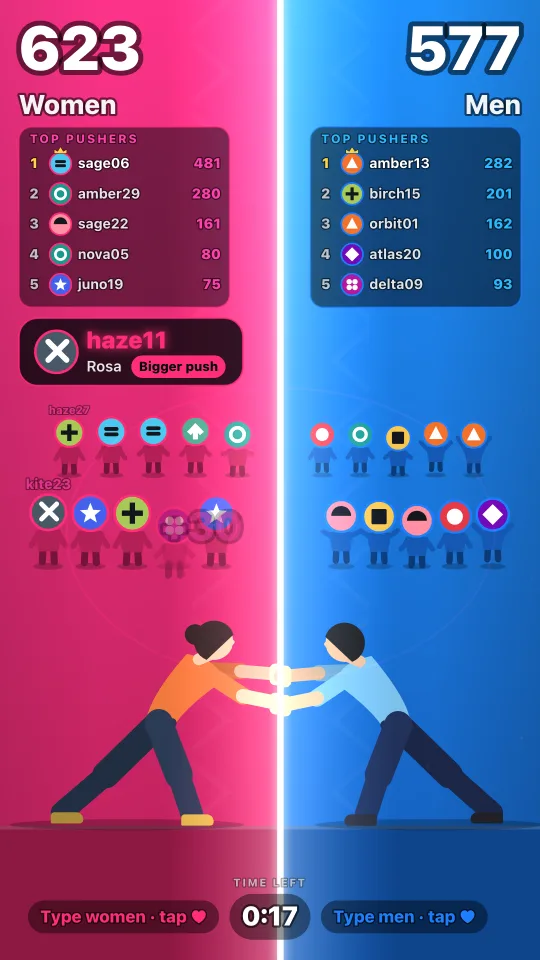
One word in chat puts a viewer on a side and their own face in its crowd, and from then on every like they send pushes the line between the two — heard from their side of the room and seen rising off their face. Each side ranks its own pushers, the whistle names each side's MVP, and three minutes decides it, unless one side is pushed clean off the screen first.
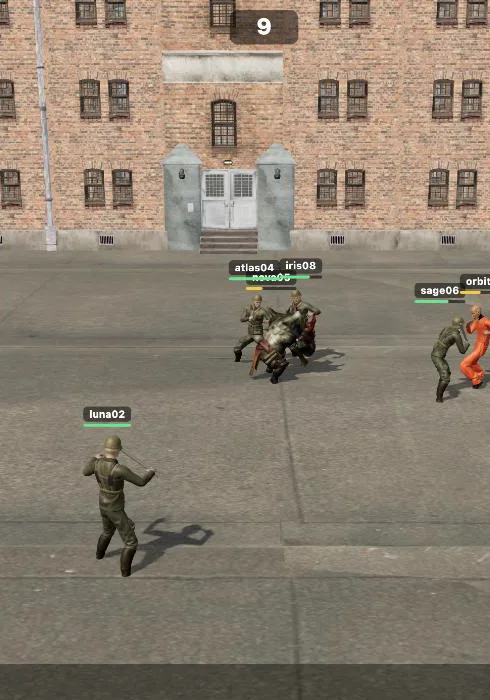
A like costs nothing and puts you in the pit as a bare convict; a gift climbs you up a seven-rung ladder priced off the gift's own coins, so a rung really is as much stronger as it is dearer — from bare fists to a club, a bow, a rifle, and a knight in full plate at the top. Two of the seven shoot instead of swinging, and closing the distance on them is how the fighters below them answer back. Likes bank punches rather than throwing them on the spot — a swing is an animation with a real wind-up, so a like adds to what the next blow carries, and it lands on the frame the fist or the arrow actually arrives. Nobody stands still waiting to be tapped for: fighters close, circle, give ground and trade on their own. There are no rounds — the yard opens with the stream and never closes. Going down costs you the costume, not your evening: three seconds later your next like puts you back in as a convict, or a gift brings you back at once and re-arms you on the way.
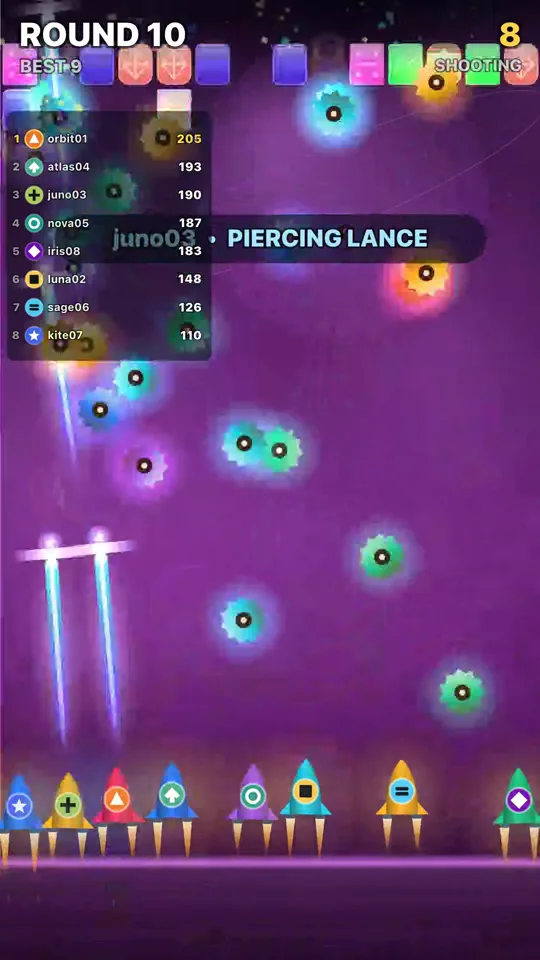
No sides and no duel: everybody who likes gets a rocket on the deck and the room shoots the same wall together. It comes down a row at a time and a round is only over when the last block of it is gone, so the finish line is real — and the next round's blocks are tougher, in new colours, against a new sky. Likes are the ammunition and they are paced rather than dumped, so a viewer tapping without pause fires without pause. Gifts buy ten seconds of being a different gun, and each rung answers a different problem the wall is giving you — never just a bigger number.
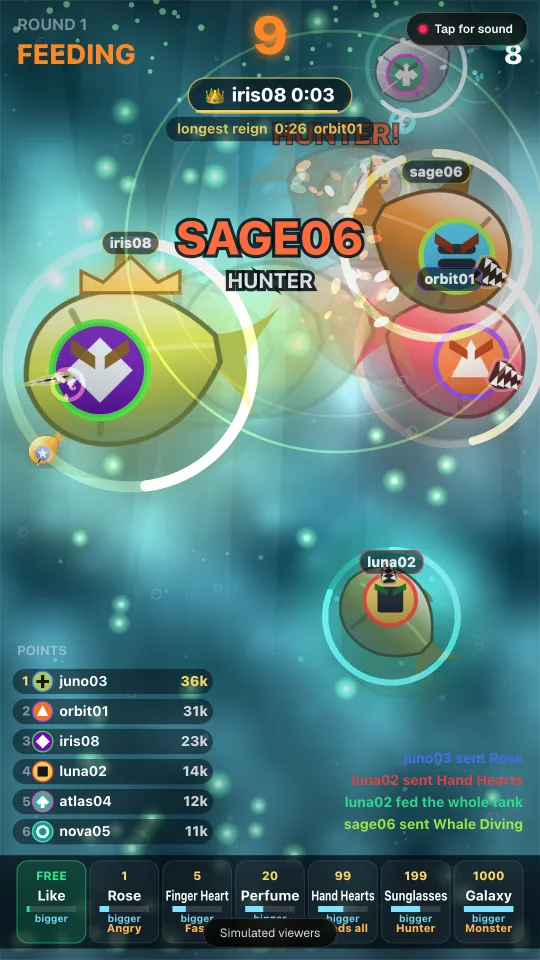
Everyone who plays gets a fish carrying their own profile picture. A like feeds it and it shrinks every second whether you tap or not, so the tank is a live readout of who is still playing. A gift does something else entirely: it enrages your fish. It goes red, outswims everything calm in the water, stops being afraid of anything and tears lumps out of whatever it catches. Bitten down to nothing, a fish is swallowed and comes straight back as a minnow — nobody is ever out.
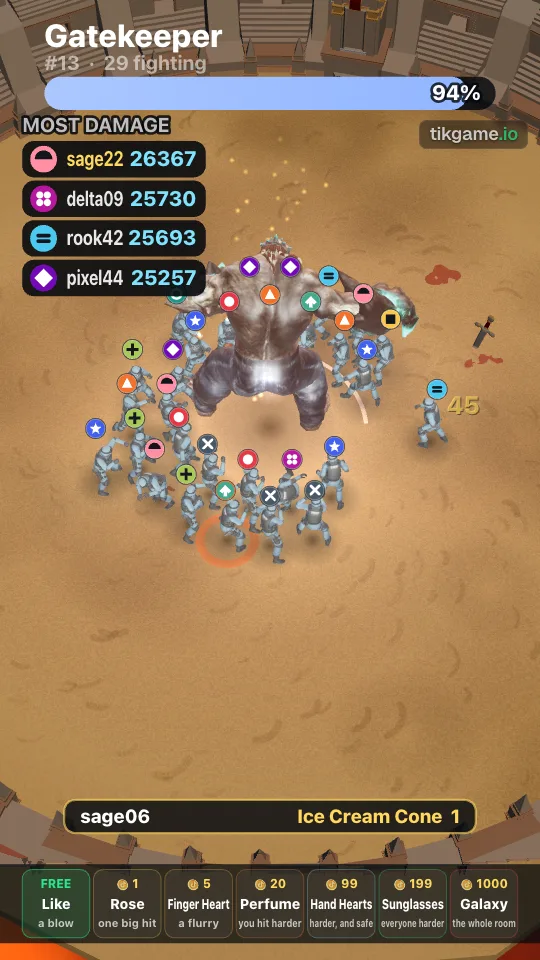
Every other game here splits your chat. This one puts all of it on the same side. Everyone who taps is in the ring — no seats, no waiting — a like throws a blow, and one shared health bar says how it is going, the same picture at eight viewers and at six hundred. The boss sweeps the ring and kills whoever it hits; tap again and you are back in. Put it down and a bigger one walks in, for as long as you are live.
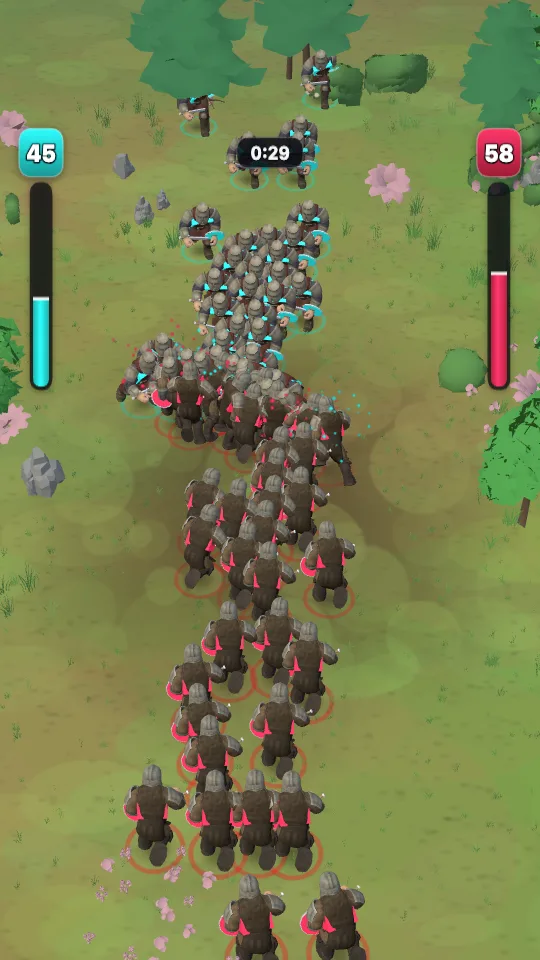
A hundred soldiers, fifty a side. Like and yours runs onto the field with a sword; keep tapping and it swings four times harder than one nobody is playing. A gift arms it instead: an archer, a wizard, and a king at the top, and anything too small to climb a rung sends your soldier into a rage instead. Knocked down, it is back in seconds on the same side with everything it earned. Most kills takes the field, and the three who did the most are named on it. Switch one setting and the room picks its own sides by typing a word — two named armies, and no even-ing up.